Brakes always squeak, but in most cases we simply don’t hear it. The sound that appears during braking is actually vibrations that accompany the process itself. However, sometimes these sounds become clearly audible. This is already a signal to think about whether everything is functioning properly with the braking system. In this article, specialists from the RemZone auto service explain when a squeak is harmless and when it’s better to visit a service center for diagnostics. We will also share examples from real customer cases.
Features of How a Car’s Braking System Works
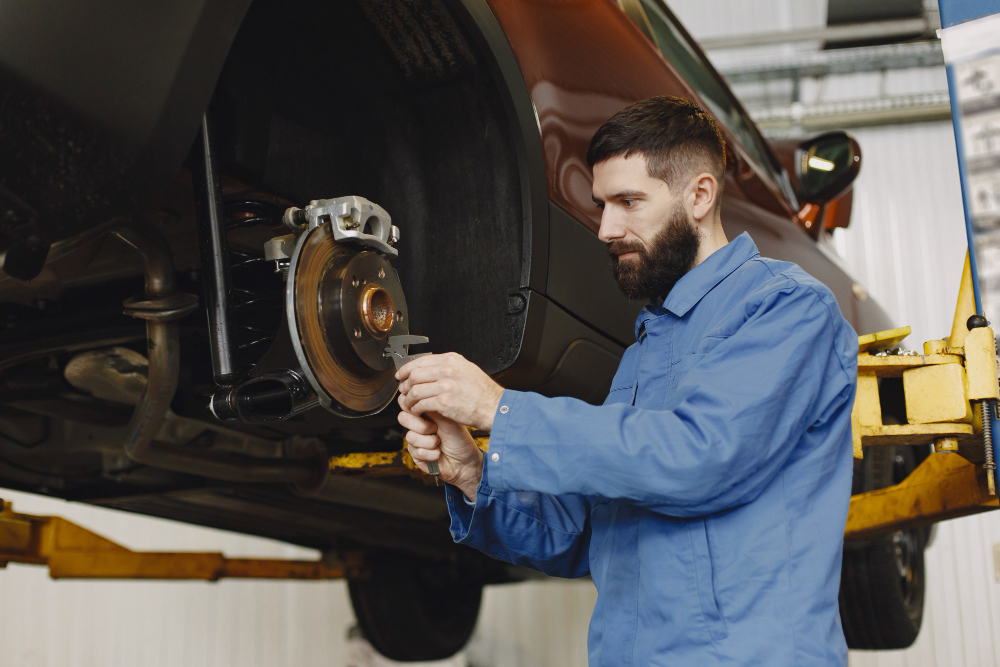
The system consists of the following components: brake discs, brake pads, calipers, and brake fluid. When the driver presses the brake pedal, the pads press against the brake disc, creating friction that slows the wheel’s rotation and stops the car. Any squeaking sound we hear is the result of vibration between the pad and the disc. Sometimes this vibration is normal, but in certain cases it may indicate a malfunction.
When Brake Squeaking Is Safe
- New brake pads. They may squeak during the so-called bedding-in period. This is the time needed for the surface of the part to adapt to the brake disc. During the first several dozen, and sometimes even hundreds of kilometers, a squeaking sound may occur. This is normal, does not require repair, and disappears on its own.
- Moisture after rain or a car wash. If the vehicle has been parked outside for a long time or you recently washed it, a thin layer of moisture or rust may form on the brake discs. The first braking attempts afterward may be accompanied by squeaking because the pads are cleaning the surface of the disc. After several braking cycles, the sound usually disappears.
- Dust and dirt entering the braking system. If small particles get between the pad and the disc, they can cause squeaking or even whistling. The issue usually disappears after the brakes are cleaned or after a regular car wash.
- Brake pad material characteristics. For example, metallic or ceramic pads can be noisier compared to others. This is related to their hardness and the composition of the friction material. In some cases, slight squeaking is simply a characteristic of the material.
When Brake Squeaking Is Dangerous
- Brake pad wear. Most brake pads have a special wear indicator (a small metal plate). When the pad thickness becomes critically low, the plate begins to touch the disc and the driver hears a high-pitched squeal. This is a sign that you need to replace the brake pads as soon as possible. If the sound is ignored, the pad can wear down completely and the metal base will start rubbing against the disc. This creates a direct safety risk: braking efficiency decreases, the brakes overheat, and the brake disc can be damaged.
- Overheated brakes. Aggressive driving and frequent hard braking often lead to braking system problems. When brakes constantly overheat, the surfaces of the pads and discs become smooth and “glazed.” Braking performance worsens and a constant squeaking noise appears.
- Problems with the calipers. If the caliper malfunctions or the guide pins seize, the pads press unevenly against the disc. This causes squeaking, brake overheating, and rapid pad wear.
- Stones or metal objects trapped inside. Sometimes the cause of a sharp, loud squeak is a small stone caught between the pad and the disc. This symptom should not be ignored, as the foreign object can damage the disc.
Examples From Our Practice
When the squeak was a warning sign
The client came to our auto service in Warsaw with a complaint about a loud squeaking noise during every braking at low speed. During the diagnostics, the mechanics found that the brake pads were completely worn out and the metal wear indicator had already begun rubbing against the brake disc. If the driver had continued driving, it could have led to disc damage and reduced braking efficiency. The issue was resolved by replacing the brake pads and checking the condition of the discs.
When it didn’t mean anything serious
Another client noticed brake squeaking in the morning after the car had been parked outside overnight and decided to schedule a diagnostic at RemZone. The inspection showed that the braking system was fully functional. The cause of the noise was a thin layer of surface rust on the brake discs that appeared due to humid weather. After several braking cycles during the trip, the squeak disappeared and no repairs were needed.
Tips from RemZone mechanics: when you should visit a service center
Our mechanics recommend not postponing diagnostics if the squeaking does not disappear for a long time (even a few days is already enough), if a metallic grinding sound appears, if the brakes begin to work worse, or if there is vibration during braking.