A car battery is one of the key components of a vehicle — its condition directly affects the stable operation of all systems in the car. At our auto service center in Warsaw, we often deal with issues related to battery failure. These problems occur particularly often during the cold season.
It’s worth noting that the average lifespan of a standard lead-acid starter battery is about 4–5 years. There are exceptions when a battery can last up to 7 years, but this comes with a higher risk of sudden failure.
Why Does the Battery Discharge Faster in Winter?
When the temperature drops below zero, the electrolyte density decreases and the internal resistance of the battery increases. As a result, it becomes harder and slower to charge, while discharging occurs much faster. Even at 0°C, the actual capacity drops to about 80% of the nominal value.
Factors Contributing to Rapid Discharge:
- When the car sits unused in the cold for a long time, self-discharge occurs due to chemical reactions and the current draw from onboard electronics.
- Insufficient charging from the alternator due to reduced efficiency in low temperatures. Difficult road conditions and driving dynamics can worsen the situation. At low engine speeds, voltage and current output are minimal.
- Too many electrical devices connected to the system. Do you often forget to turn off the lights or leave the heater running? If the cabin, windshield, or mirror heaters are constantly on, don’t be surprised that the battery discharges quickly.
- Frequent restarts of the engine consume the battery’s entire charge.
- Short and frequent trips lasting under 20 minutes. In such cases, the battery doesn’t have enough time to recharge fully after the previous engine start.
That’s why, during winter, your car battery needs extra care and preparation for the demanding operating conditions.
How to Prepare the Battery for Winter
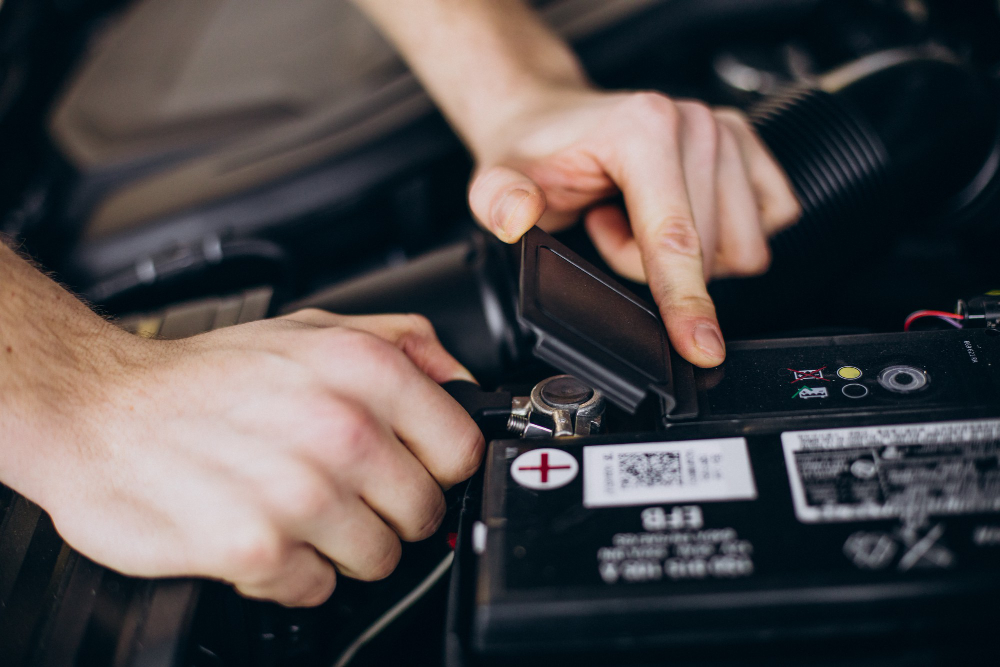
First, check the electrolyte density — if it’s low, the capacity will also be weak. Use a multimeter to measure the voltage at the terminals; it should be no less than 12.7 V. It’s also recommended to check the cleanliness of the battery case and terminals. Dirt and corrosion cause current leakage and worsen contact in the electrical system, which reduces charging and discharging efficiency. Check the alternator belt tension as well — if it’s too loose, the system won’t be able to reach optimal charging performance while driving.
It’s also a good idea to insulate the engine bay to protect the electrolyte and lead plates from the cold. An engine undertray will help retain heat.
Tips from Remzone Mechanics
To keep your battery in good working condition:
- Don’t crank the starter for more than 10 seconds and make short pauses between attempts.
- Don’t leave the car lights on overnight.
- Don’t try to “squeeze out the last bit” of a nearly dead battery.
- If the car is not being used and stays in the garage, it’s best to remove the battery and store it in a warm place.
When choosing a new battery, make sure it meets your vehicle’s exact specifications. It’s always better to use original products, as they ensure long-lasting and reliable performance.