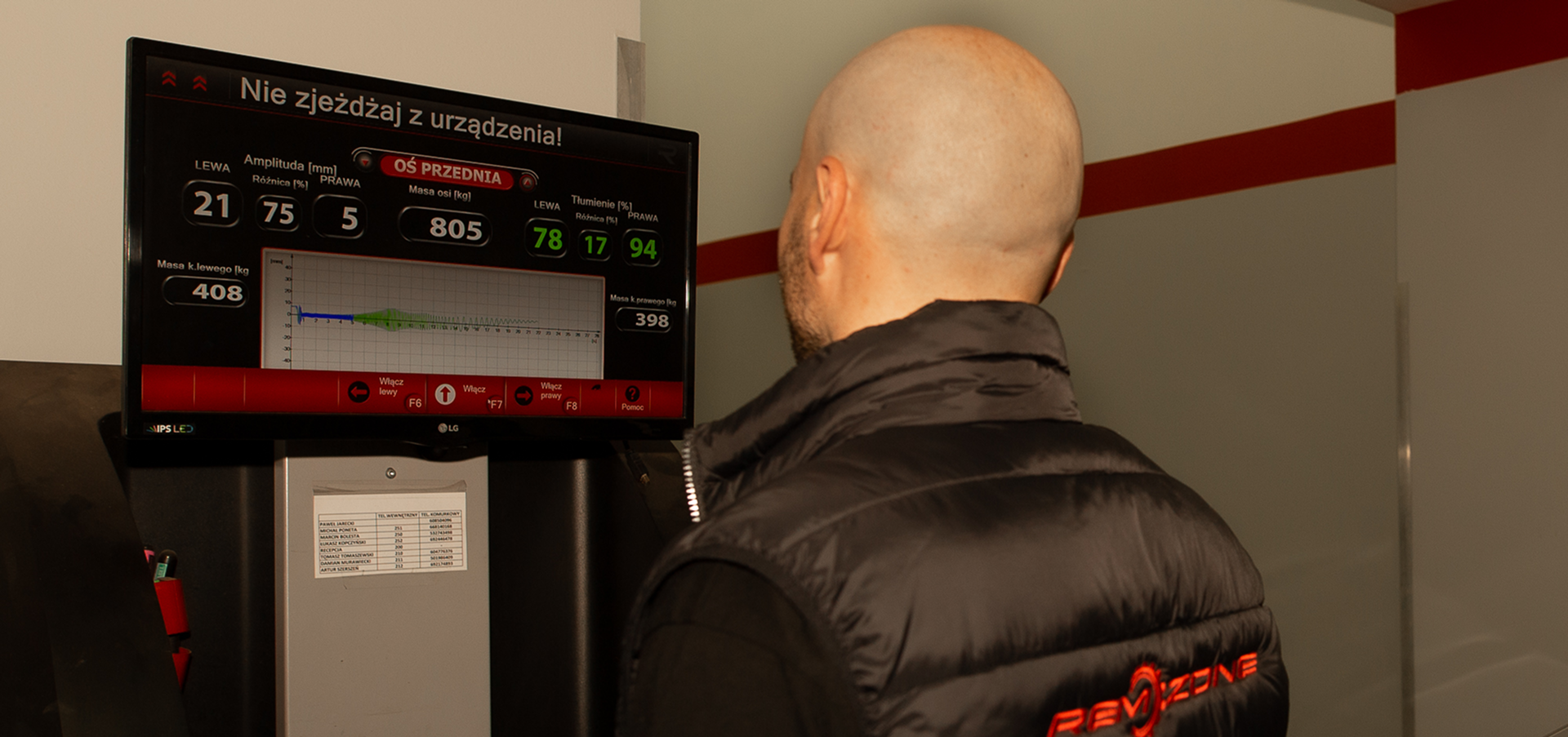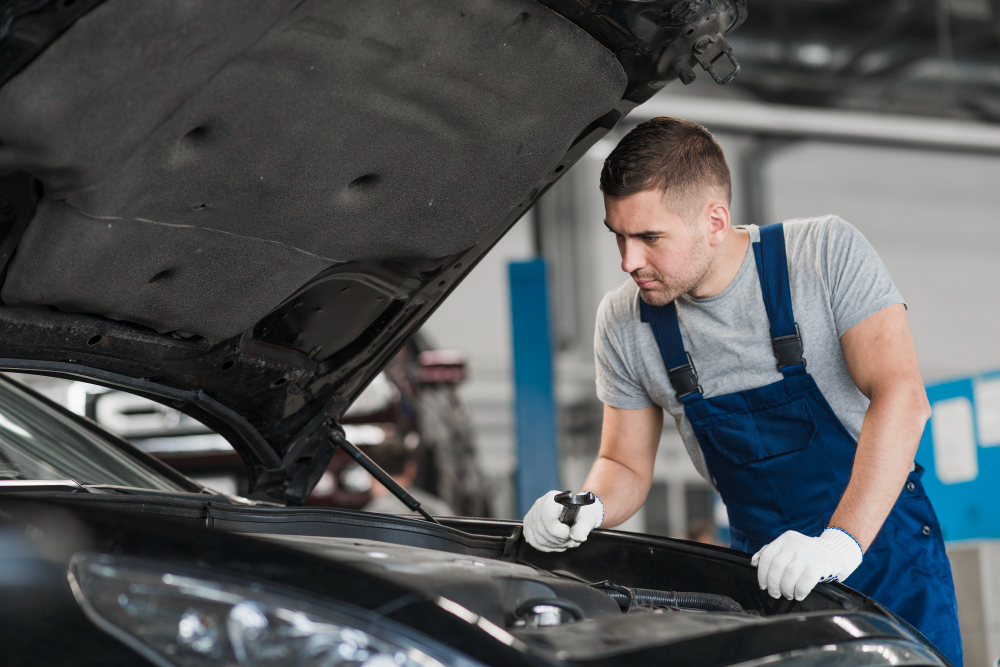
If a car starts jerking at low RPM, it’s not just a coincidence but a sign of a possible malfunction. At the RemZone car service in Warsaw, we recommend that our customers pay attention to such signals immediately — otherwise, it may lead to more serious breakdowns and costly repairs. In this article, we will discuss the causes of jerking, explain how to perform a basic self-diagnosis, and when it’s necessary to visit a service center.
How to understand that there is already a problem
Jerking at low RPM can manifest in different ways. For example, the car may start jerking even during smooth acceleration, jolts may appear in first or second gear, engine speed may fluctuate without pressing the gas pedal, or there may be a noticeable loss of power when pressing it. The problem can suddenly appear when the engine is cold, in traffic jams during slow driving, or while shifting gears. These symptoms may indicate issues in different systems, so it’s important to identify the cause.
Reasons why a car jerks at low RPM
The first thing to check is the fuel system. If less air-fuel mixture enters the cylinders than required during driving, a loss of power is felt. When the mixture is supplied unevenly, the ignition timing is disrupted (fuel does not ignite properly), which affects engine performance. The cause is usually low-quality fuel, dirty injectors, or low fuel pump pressure.
How to detect problems in the fuel system: check the crankshaft or camshaft position sensor (depending on the car’s make and model), inspect the throttle position and the condition of the injectors. If there are inconsistencies, it’s better to visit a service center.
The second most common reason for jerking at low RPM is a malfunction in the ignition system. If the fuel does not burn properly, the engine runs unevenly. The problem may be caused by worn spark plugs, faulty ignition coils, or misfires. You can recognize this by symptoms such as rough engine operation, vibrations at idle, and jerking under load. At the service center, this issue is typically resolved by replacing spark plugs and checking the coils.
Air supply issues are another common reason why a car jerks at low RPM. The engine needs the correct balance of fuel and air. Jerking is often caused by a dirty air filter, a faulty mass airflow sensor (MAF), or air leaks. A driver may notice this problem through unstable RPM, increased fuel consumption, and poor throttle response.
Since modern cars heavily depend on electronics, the issue is often related to sensor errors. These may include the throttle position sensor, oxygen sensor (lambda sensor), or the engine control unit (ECU). What happens when a sensor is faulty: the system incorrectly calculates the air-fuel mixture, leading to jerking and power loss. In such cases, we recommend performing computer diagnostics to quickly identify the issue.
Sometimes the problem is not in the engine but in the transmission. Jerking can often be caused by a worn clutch or gearbox issues. If you feel jolts specifically during gear changes, the transmission should be checked.
There are also less obvious causes, such as a clogged catalytic converter, a faulty EGR valve, or low fuel pressure. These problems usually require professional diagnostics at a service center.
Checklist for self-inspection from RemZone mechanics
- Fill up with high-quality fuel at a trusted gas station.
- Check the condition of the spark plugs.
- Inspect the air filter and fuel filter.
- Listen to how the engine runs.
- If you have an OBD-II scanner, read the error codes.
We strongly recommend visiting a service center urgently if the jerking suddenly worsens, the Check Engine light comes on, the car loses power, or unusual noises appear. Ignoring these symptoms can lead to engine damage or catalytic converter failure, resulting in serious repair costs.