Car owners in Poland use their vehicles mainly in city traffic. These are daily trips to work, school, and other short routes around the city that affect engine oil. Clients who come to our car service in Warsaw, note that there is often a decrease in the oil level between oil changes. This raises a natural question: is such consumption normal, or is it a sign of engine problems? We will talk about this in today’s article.
How is city driving different?
City driving is significantly different from driving on highways or intercity routes. This is especially noticeable in large cities like Warsaw, Wrocław, Poznań, and Kraków. City driving is characterized by frequent stops and accelerations, traffic jams, prolonged idling, trips of up to 10 km, and cold starts. All of these factors put extra stress on the engine and affect oil consumption.
What level of oil consumption is considered normal?
If oil consumption is moderate, it can be considered normal. Even in a properly functioning engine, small amounts of oil sometimes enter the combustion chamber and burn along with fuel. In most cases, manufacturers allow up to 0.3–0.5 liters per 1,000 km for naturally aspirated gasoline engines and 0.5–1 liter per 1,000 km for turbocharged engines.
We advise our clients to be cautious: if consumption exceeds one liter, it is already a warning sign. Blue smoke from the exhaust or oil leaks under the car are also bad signs. Pay attention if consumption suddenly increases or if there is a burnt-oil smell. Our mechanics usually find worn piston rings, worn valve stem seals, turbocharger issues, leaks through gaskets or seals, or malfunctions in the crankcase ventilation system when these symptoms appear.
How to help your engine in a metropolis
Changing oil every 15,000 km according to the standard schedule can be risky for the engine. Our mechanics recommend reducing the interval to 7,000–8,000 km. At least once a week, you should “hit the road” and drive for 20–30 minutes at stable RPMs. This helps burn off carbon deposits and evaporate excess condensation. It’s also important to keep radiators clean, as overheating in traffic jams is a main enemy of valve stem seals.
How “RemZone” recommends controlling consumption
We recommend all our clients who visit our service center to:
- check oil levels every 1,000 km and before any long trip;
- use only certified products from the manufacturer or approved alternatives;
- follow the oil change schedule, especially for city driving;
- perform regular technical diagnostics.
If consumption significantly exceeds normal levels, we recommend immediate diagnostics to prevent costly engine problems.
Case study: our client
A BMW 320d owner came to our service center for a routine oil and filter change before a long trip. Until that point, the car had been used mostly in city conditions, including short trips, daily traffic jams, and cold starts. The owner assured us that the car always operated normally, with no warning lights on the dashboard.
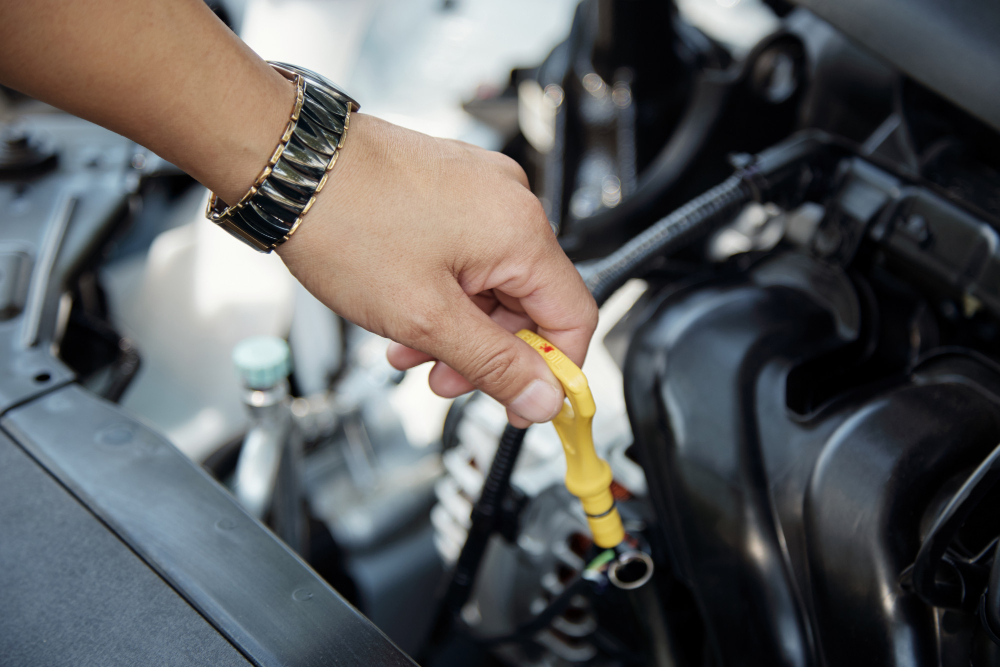
However, during servicing, our specialists noticed a crucial detail: the oil level was far below the minimum mark on the dipstick. For a car that had traveled around 8,000 km since the last standard oil change, this was highly unusual. A more detailed inspection revealed slight oil seepage around the valve cover, contamination in the crankcase ventilation system, and signs of worn valve stem seals. At this stage, the problem had not yet led to serious consequences, but continued operation without monitoring the oil level could have caused engine oil starvation.