In essence, every drive wears out a car’s suspension. This is especially noticeable if the driver enjoys extreme driving or has to travel on uneven roads or cobblestones. Over time, the first knocks appear, the car starts pulling to one side, braking distance increases, and tire wear rises. These signs indicate that it’s time to visit a car service in Warsaw. In this situation, it’s important not only to know the symptoms of a malfunction theoretically but also to be able to check the suspension yourself. That’s exactly what we decided to cover in today’s article.
A Guide to Self-Checking Your Suspension from RemZone Mechanics
This basic knowledge will allow you to independently assess the condition of the vehicle’s chassis without using a lift and determine whether suspension repair is necessary for your car.
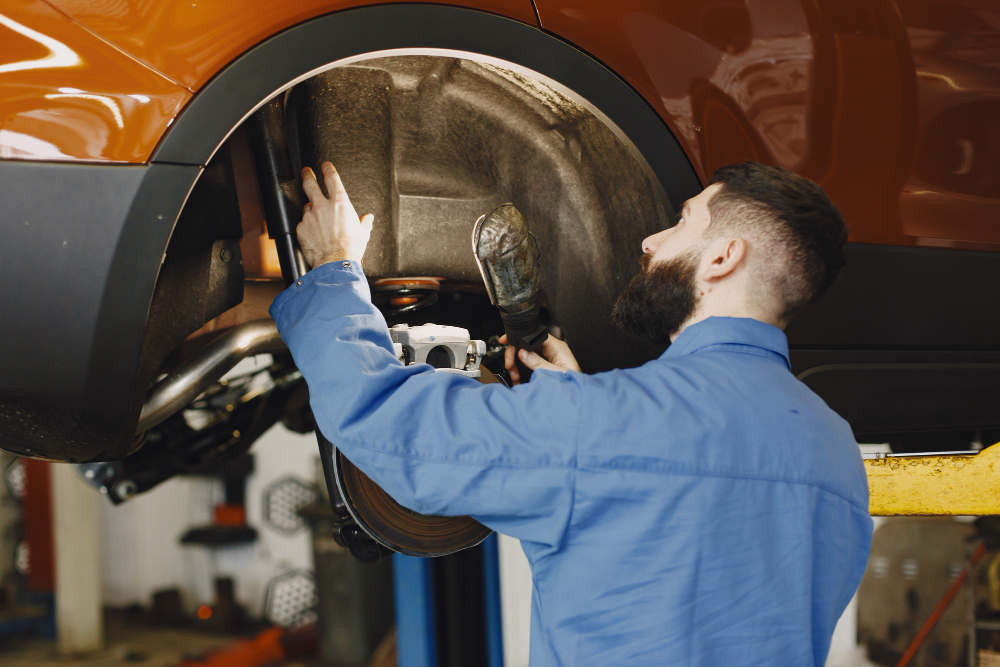
- Inspect the Shock Absorbers
Pay attention to any signs of moisture, which indicate oil leakage. Then perform three actions to detect potential issues: rock the body by pressing on the fender, release it, and count the oscillations. If there are three or more bounces, it indicates a problem with the component. After the rocking test, it’s recommended to compare the height of the wheel arches – this can be done by eye, as the sagging side is immediately visible. - Check for Play in the Control Arms
The car should be lifted on a jack, and a pry bar placed between the control arm and subframe, applying force gradually. If movement exceeds 2 mm, the bushing is worn out. - Assess the Springs’ Condition
Start with a visual inspection of the coils for cracks, rust, or paint chips. Keep in mind that even a visually intact spring can sag and alter the suspension geometry. To check this, use a caliper to measure the free distance between the coils with the wheel unloaded. Compare the result with the specifications in the manual. If the deviation exceeds 5%, the metal is fatigued and needs replacement. - Check Ball Joints and Stabilizer Bushings
Grip the wheel by hand at the 12 and 6 o’clock positions and rock it. If you hear a click, there is play in the ball joint. Then move your hands to the 3 and 9 o’clock positions and repeat the test. If you hear knocking, the tie rod ends need inspection. A faulty stabilizer bushing is diagnosed visually – cracks, flattening, and damaged rubber are visible.
How to Extend the Life of Shock Absorbers
Shock absorbers are components that fail more often than others. However, their lifespan can be significantly extended. Avoid poor roads and aggressive driving, and do not overload the car. Regular checks are recommended: every 10–15 thousand kilometers with normal driving, or every 5–7 thousand kilometers with frequent aggressive driving. Ensure the shock absorbers and their shafts are sealed, have protective covers and bump stops, and maintain proper tire pressure. Properly use the car in cold weather – warm up the shock absorbers so they regain their working characteristics. During the first few kilometers after starting, drive smoothly and slowly, avoiding large bumps.